View attachment 43440
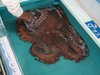
This is the North- Pacific-Giant-Octopus
It is a chameleon of sorts. I'm posting this as a new section titled:
WE ARE NOT FREAKS
Everybody knows the octopus is smart, and many know enough to know the octopus has an incredibly high intelligence. But did you know that this particular 🐙 is the largest ?! It lives about three to five years and grows to be anywhere from 70 - 100 lbs. The largest one ever found grew to be 156 lbs and 23 ft from tip to tip of the tentacles, which is pretty unheard of in most fishes, supposedly. It is also the most difficult to spot because it changes colors to protect itself from predators. It lives in the north Pacific ocean, along the continental shelf. Its range is expansive, all the way from southern California, north along the coastline arcing over the north Pacific, across the Aleutians toward Japan. " They can be found from the intertidal to depths of 2,000 feet. " - According to the alaska department of fish and wildlife. Since they can be found in shallow waters but have a range of depth, they can be spotted by divers. They have been seen changing colors and impersonating other animals and kelp. According to divers when in the kelp they waved their tentacles in the same fashion amongst the sea grass.
Just like multiples, these animals change the way they look and move depending on how they feel and where danger is. Just like multiples they can survive if a piece of a tentacle is bitten off. They have more to help them move along. But it's tiring and they must rest, just like us, somewhere hidden and safe. Just like multiples they are used to traveling in more than one environment and needing to protect themselves according to the environment they are in.
When multiples lose their sense of environment they cannot survive, that's where the d.i.d. labels come in. Big ole word just to say the defenses aren't working like they used to. The dysfunction happens from trying to survive as a color and shape changing animal when the environment suddenly changes to a foreign one, or if suddenly the habit or route if travel always known, was no longer an option, or some new factor was introduced or a relied upon species, removed. If suddenly the kelp disappeared, because in the new waters no kelp existed, for instance. Now, I do not know if octopuses are susceptible to the same disfunction as a dissociatively multiple human, if they were to be relocated to say, the Indian Ocean, but I believe the ability to re-adapt would be very difficult, even for such an intelligent animal, if it could survive at all.
This is in advocation for DIDawareness day which I missed by a week or more idk.